
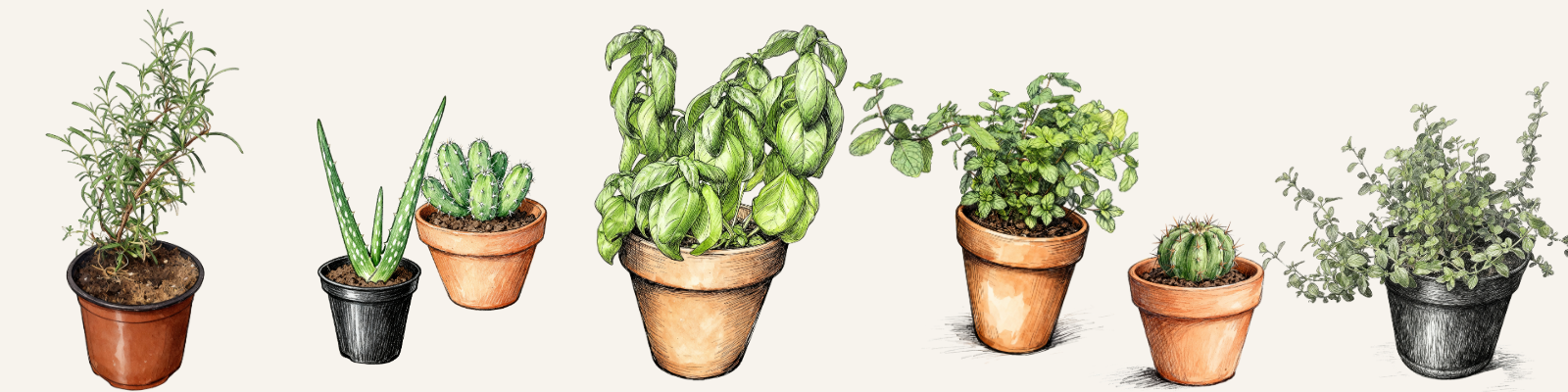
Thai Basil brings a bold, spicy-sweet fragrance that instantly transports your senses to warm kitchens and vibrant dishes. With deep green leaves, purple stems, and a slightly anise-like aroma, it’s a stunning herb that grows beautifully indoors or out.
Light & Temperature:
Give your Thai Basil at least 6 hours of strong sunlight each day. A sunny kitchen window, greenhouse shelf, or grow light keeps it thriving. It prefers warm air, ideally around 70–85°F, and should be shielded from cold drafts.
Watering:
Keep the soil lightly but consistently moist. Allow the top inch to dry before watering again. Basil wilts quickly when thirsty, so regular checks help it stay full and fragrant.
Feeding:
Feed every 3–4 weeks with a gentle, balanced organic fertilizer. This encourages fresh, tender growth which is perfect for cooking.
Repotting Tips:
If roots circle the pot or peek through drainage holes, move the plant into a container 1–2 inches wider. Use a rich, well-draining potting mix and avoid burying the stem too deeply. Water thoroughly after repotting to help it settle in.
Harvesting:
Pinch stems just above a leaf pair to encourage branching. Remove flowering tips regularly to keep the flavor strong. Leaving a few leaves on each stem ensures steady new growth.
Fun Fact:
Thai Basil keeps its shape and flavor even when cooked at higher temperatures, one reason it’s essential in stir-fries and curries.